


When we think about outdoor living spaces, we often picture comfortable seating and maybe a grill. But what about a place to set down drinks or prep some snacks? That’s where the bar top comes in. We’re looking at granite versus quartz for these sunny outdoor bar tops, trying to figure out which one makes more sense for our patios and decks. It’s a choice that affects how the space looks and how much work it’ll be to keep it looking good.
Key Takeaways
- Outdoor granite countertops offer a natural, timeless look and are quite durable against heat and wear, making them a solid choice for sunny spots.
- Quartz countertops provide a modern aesthetic with excellent resistance to stains and scratches, and they generally require less upkeep than granite.
- When choosing between granite and quartz for an outdoor bar, consider how much sun exposure the area gets and what level of maintenance you’re comfortable with.
Granite Countertops For Outdoor Kitchens
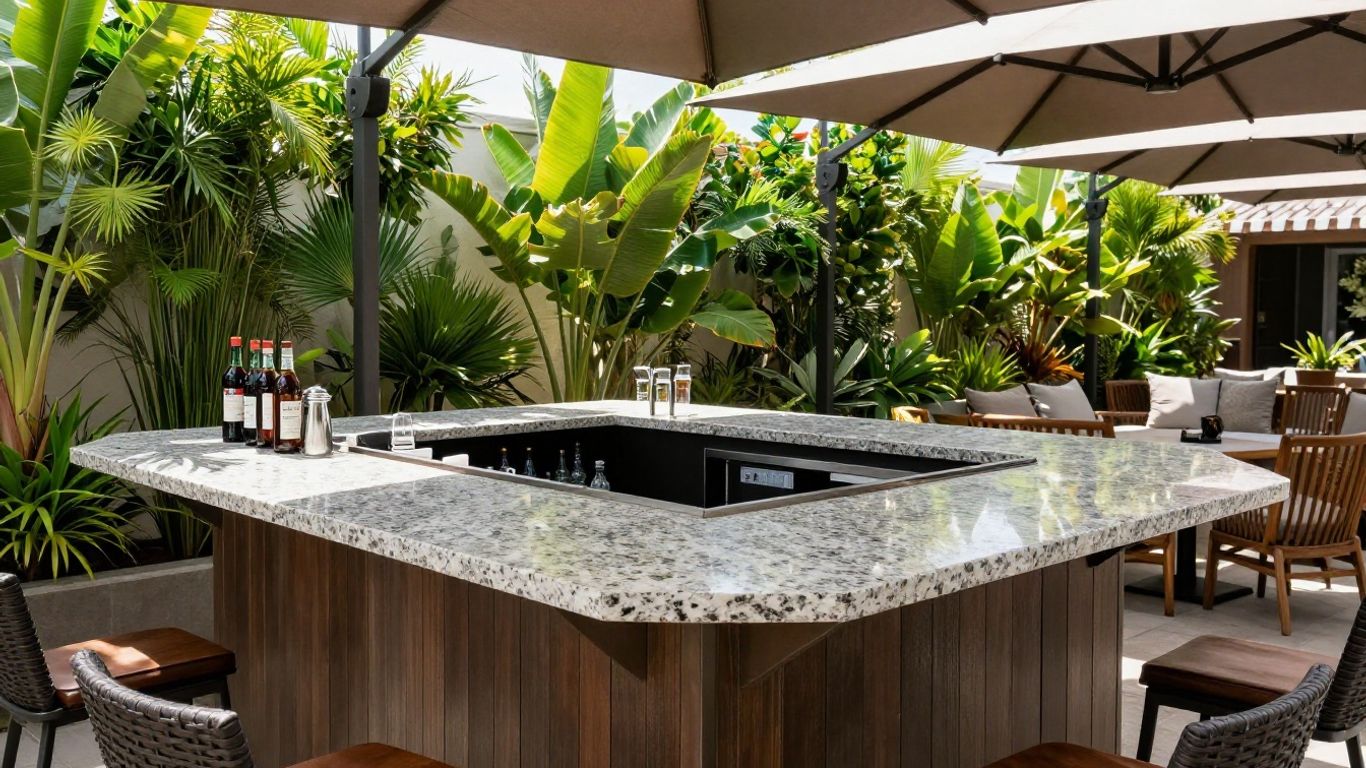
When we picture an outdoor kitchen that really lasts and still looks great year after year, granite countertops are usually the first option we talk about.
Durability and Timeless Elegance
Granite is tough, and that’s exactly what we need for an outdoor bar top. It holds up against weather swings—summer sun, pouring rain, even the occasional hail. The stone’s natural patterns make each countertop unique, and the texture and colors never look dated, no matter how trends change. For many of us, that makes granite a solid bet for anyone who wants their investment to last.
Here are the main reasons we keep coming back to granite for outdoor installations:
- Naturally resists heat, making it perfect for sunny patios (no fading or dull spots)
- Handles scratches better than many other materials
- Doesn’t warp or peel after exposure to water or heat
| Property | Granite | Why It Matters Outdoors |
|---|---|---|
| Heat Resistance | Excellent | No surface burns in full sun |
| Scratch Resistance | High | Stands up to sliding plates |
| Color Maintenance | Natural, doesn’t fade | Stays rich in outdoor light |
| Required Sealing | Annual | Easy extra protection |
When we choose granite, we’re getting a stone that won’t just survive life outdoors—it develops character and often looks even better as the years go by.
Maintenance and Care for Outdoor Granite Countertops
Granite isn’t totally maintenance-free, but we find it pretty easy to live with. You’ll want to seal it about once a year; this step goes a long way toward preventing stains from spills or wet glasses.
Here’s how we keep our granite bar tops looking sharp all season:
- Clean with mild soap and warm water (skip the abrasive cleaners)
- Re-seal once each year to keep moisture and stains out
- Wipe up acidic spills (like citrus or wine) quickly to avoid etching
We’re always telling clients that while granite is a natural material, it still likes a little attention now and then. Take care of it, and it’ll reward you with years of reliable use and great style. It might sound like a chore at first, but in practice, it’s just part of the outdoor routine—open the patio, wipe down the counter, and you’re ready for guests.
Quartz Countertops: A Modern Outdoor Solution
When we think about outdoor bar tops, especially those that will see a lot of sun, quartz often comes up. It’s a popular choice for a reason. Unlike natural stones, quartz is engineered, which gives us a lot of control over its properties. This means we can get a really consistent look and feel, which is great if you have a specific design in mind for your outdoor space.
Low-Maintenance Luxury for Sunny Spots
One of the biggest draws of quartz for outdoor use is how easy it is to care for. It’s non-porous, which is a fancy way of saying it doesn’t soak up liquids. This makes it really resistant to stains from things like spilled drinks or food. Plus, it holds up well against scratches and chips from everyday use. For a busy outdoor bar area, this low-maintenance aspect is a huge plus. You won’t have to worry as much about constant sealing or special cleaning products. A simple wipe-down with soap and water is usually all it takes to keep it looking good, even after a party.
Versatility and Customization Options
Quartz really shines when it comes to design flexibility. Because it’s manufactured, we can find it in a vast array of colors and patterns. Whether you want something that mimics the look of natural stone, a solid bold color, or a unique veining pattern, quartz can deliver. This makes it easy to match your outdoor bar to the rest of your home’s style or create a completely new look. We can also shape quartz into various forms, allowing for custom edges or integrated features that might be trickier with other materials. It’s a great option if you’re looking for something that’s both practical and has a modern aesthetic.
While quartz is a fantastic choice for many outdoor applications, it’s worth noting that prolonged, intense UV exposure can sometimes affect the resin binders in certain formulations over many years. However, for most typical sunny patio or bar setups, modern quartz products are designed to be quite resilient. We always recommend discussing specific product lines and their UV resistance with your installer to ensure the best long-term performance for your unique environment.
Choosing the Right Material for Your Outdoor Bar
Deciding between granite and quartz for your outdoor bar top involves looking at a few key things. We want a surface that not only looks good but also holds up to the elements, especially direct sun. Both materials have their strengths, and understanding them helps us make the best choice for our specific needs.
Comparing Granite and Quartz for Sun Exposure
When we think about an outdoor bar, the sun is a big factor. Granite, being a natural stone, can handle heat quite well. However, prolonged, intense sun exposure over many years might cause some slight fading in darker colors, though this is generally minimal and depends on the specific slab. It’s also porous, so sealing it properly is important to prevent stains from spills, which can happen at any outdoor gathering.
Quartz, on the other hand, is engineered. While it’s incredibly durable and non-porous, which is great for resisting stains, its resin binders can be sensitive to UV rays. Direct, prolonged sunlight can potentially cause quartz to discolor or even degrade over time. This is less of a concern for indoor use, but for an outdoor bar that gets a lot of sun, it’s something we need to consider carefully. Some manufacturers offer UV-resistant quartz, which would be a better option for sunny spots.
Here’s a quick look at how they stack up:
| Feature | Granite | Quartz |
|---|---|---|
| Sun Exposure | Generally good, slight fading possible | Can discolor/degrade without UV treatment |
| Heat Resistance | Excellent | Good, but resin can be affected by extreme heat |
| Porosity | Porous (requires sealing) | Non-porous (stain resistant) |
| Maintenance | Requires annual sealing, regular cleaning | Low maintenance, easy to clean |
| Appearance | Natural, unique patterns | Consistent, wide range of colors/patterns |
Expert Guidance for Your Outdoor Granite Countertops
If you’re leaning towards granite for its natural beauty and heat resistance, we recommend a few steps to ensure it performs well outdoors. First, choose a granite that has been properly sealed. This is non-negotiable for outdoor applications. We also suggest looking at lighter colors, as they tend to show less effect from sun exposure over time compared to very dark, rich hues.
For quartz, if you absolutely love its look and low maintenance, seek out options specifically designed for outdoor use or those with enhanced UV resistance. It’s always best to ask your installer about the material’s suitability for direct sun.
Ultimately, the best choice depends on your priorities. Do you value the unique, natural look of granite and are prepared for the sealing routine? Or do you prefer the consistent appearance and easy care of quartz, provided you can find a UV-stable option for your sunny location? Talking through these points with a knowledgeable fabricator will help us land on the perfect material for our outdoor bar project.
So, Which One Wins for Your Sunny Spot?
After looking at both granite and quartz for outdoor bar tops that get a lot of sun, we see that both have their good points. Granite brings that natural, unique look and handles heat well, which is great for sunny days. Quartz, on the other hand, is super tough against stains and scratches, and it doesn’t need as much upkeep. For us, the choice really comes down to what you value most: the one-of-a-kind beauty of natural stone or the easy-care, consistent look of engineered quartz. Either way, you’re getting a solid surface that can handle the elements and make your outdoor space look fantastic.
Frequently Asked Questions
How does direct sunlight affect granite and quartz countertops on an outdoor bar?
Both granite and quartz are quite tough when it comes to sunlight. Granite, being a natural stone, can handle the sun’s rays well over time without fading significantly. Quartz, on the other hand, is engineered. While most modern quartz is treated to resist UV rays, very intense, prolonged sun exposure might cause some slight color changes in certain types. For an outdoor bar that gets a lot of sun, we usually recommend granite for its natural resilience or specific UV-resistant quartz options.
Which material is easier to clean and maintain for a frequently used outdoor bar?
When it comes to easy upkeep, quartz generally has an edge. Its surface is non-porous, meaning spills and stains don’t soak in easily, making it simple to wipe down with just soap and water. Granite is also very durable, but it’s porous and needs to be sealed regularly to prevent stains. For a busy outdoor bar where drinks and food might be spilled often, the low-maintenance nature of quartz can be a big plus.
Can we customize the look of our outdoor bar countertops with granite or quartz?
Absolutely! Both materials offer great options for customizing your outdoor bar. Granite comes in a vast array of natural colors and patterns, meaning each slab is unique, giving your bar a one-of-a-kind look. Quartz, being engineered, offers a wider spectrum of consistent colors and patterns, from solid hues to designs that mimic natural stone. This allows for more predictable and specific design choices if you have a particular look in mind.
